
🌿 Hair Loss in Perimenopause: Why It Happens & What To Do About It
If you’re experiencing:
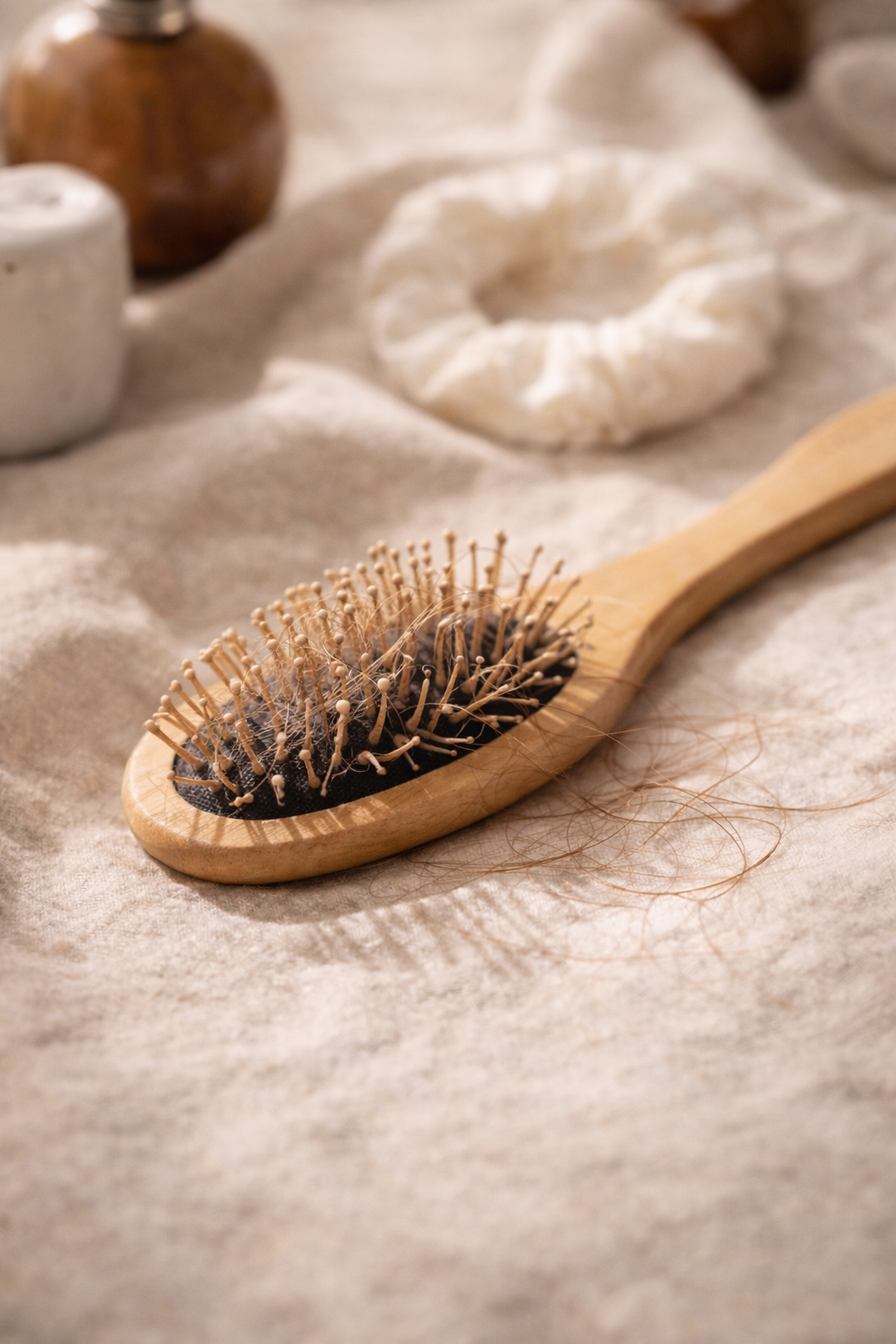
hair thinning in perimenopause
increased hair shedding
dry or brittle hair
or sudden hair loss in your 40s
You’re likely asking:
“What nutrients am I missing?”
The truth is — hair loss in perimenopause is rarely caused by just one deficiency.
It’s usually a combination of:
reduced absorption
increased nutrient demand
chronic stress and nervous system depletion
🩸 1. Iron (Ferritin) and Hair Loss in Perimenopause
One of the most common causes of hair loss in women.
Even if you’re not anemic, low ferritin levels can slow down hair growth.
Signs your hair loss may be linked to low iron:
diffuse thinning across the scalp
increased daily shedding
fatigue or low energy
feeling cold easily
Why iron drops during perimenopause:
long-term menstrual depletion
weaker digestion → lower absorption
stress reducing nutrient uptake
👉 Important: Always test ferritin before supplementing.
🧠 2. B Vitamins (B12, B6, Folate) and Hair Thinning
B vitamins play a key role in:
hair follicle growth
nervous system stability
oxygen delivery to tissues
Low B vitamins may show up as:
thinning hair
anxiety or low mood
brain fog
poor stress tolerance
From a whole-body perspective:
poor digestion reduces absorption
chronic stress increases demand
🧂 3. Zinc and Hair Shedding
Zinc is essential for:
hair follicle repair
scalp health
hormone balance
Signs of low zinc:
increased hair shedding
slow regrowth
brittle nails
dull hair
Why zinc depletion happens:
stress increases zinc usage
inflammation uses it up quickly
digestion becomes less efficient with age
🐟 4. Low Protein Intake and Hair Loss
Hair is made of protein (keratin).
If your body isn’t getting or absorbing enough protein, it will prioritize survival over hair growth.
Signs protein may be too low:
overall thinning
weak or breaking strands
slower hair growth
Common causes in perimenopause:
under-eating
calorie restriction
intermittent fasting
relying on light meals or smoothies
🧈 5. Healthy Fats and Hair Health
Healthy fats are critical for:
hormone signaling
scalp hydration
nervous system calm
Low fat intake can lead to:
dry scalp
brittle hair
increased shedding
This is especially common in women who:
follow low-fat diets
avoid oils
eat “clean” but under-nourish
☀️ 6. Vitamin D and Hair Loss
Vitamin D plays an indirect but important role in:
hair follicle cycling
immune balance
hormone regulation
Low vitamin D may contribute to:
increased shedding
slow regrowth
overall imbalance
👉 Again — test before supplementing.
🌿 Why Supplements Alone Often Don’t Fix Hair Loss
This is where most advice falls short.
You can take all the “right” supplements — and still not see results.
Why?
Because hair growth depends on:
digestion
circulation
nervous system regulation
overall energy availability
If those are compromised, nutrients won’t be used effectively.
🌿 Why Some Women Lose Hair (and Others Don’t)
Two women can have:
the same ferritin levels
the same diet
the same lifestyle
…and completely different hair outcomes.
Why?
Because hair reflects:
how well your body uses nutrients
how stable your nervous system is
how well blood reaches the scalp
Not just what you consume.
🌿 Body Types and Hair Loss in Perimenopause
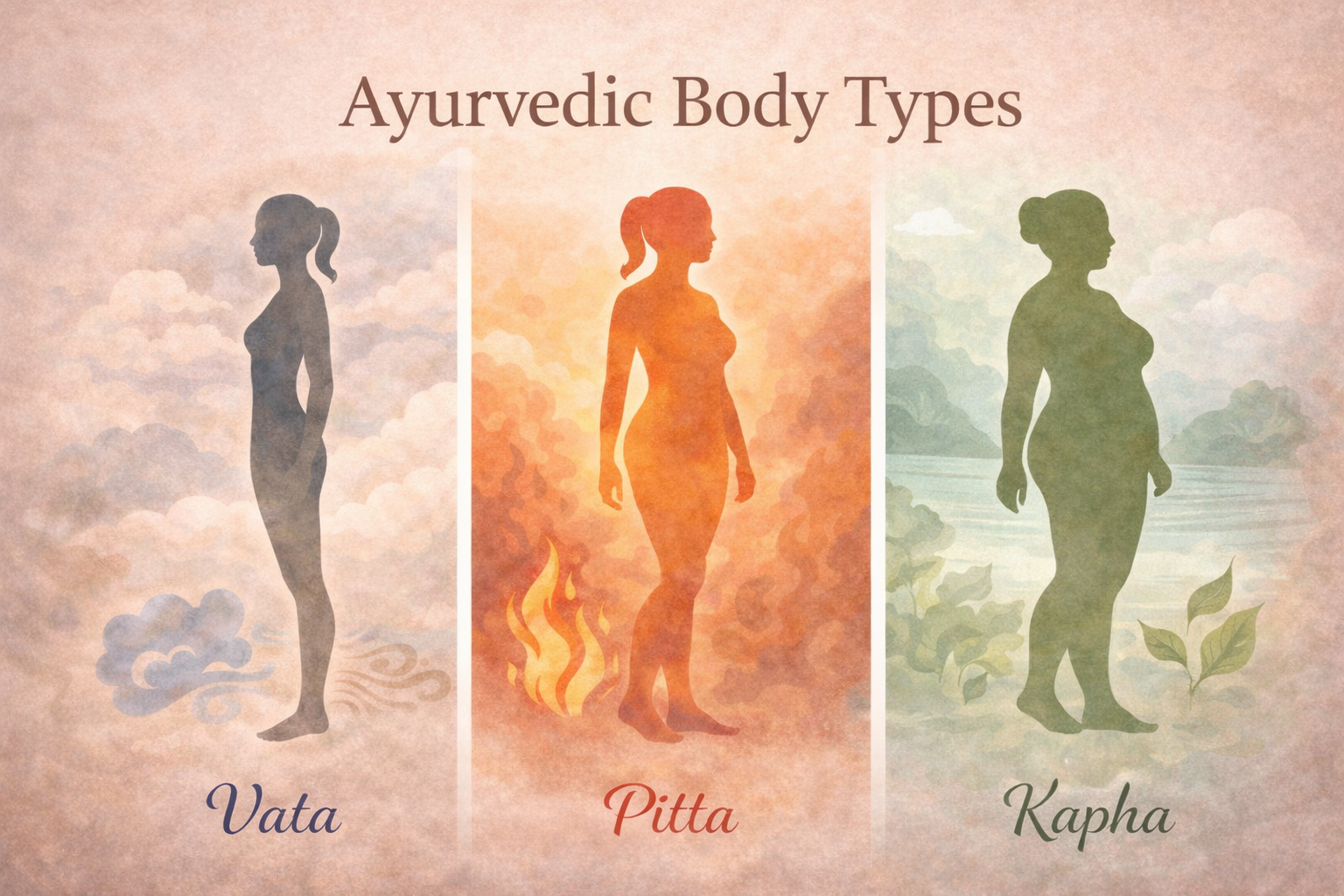
👉 Take the Free Body Type (Dosha Quiz)to find out your body type and how it responds to stress, digestion changes, and hormonal shifts.
🌿 Why Some Women Lose Hair — and Others Don’t
Not all women experience hair loss the same way in perimenopause.
A big part of the difference comes down to your body’s natural tendencies — what Ayurveda describes as your body type.
🌬️ The Most Common Driver: A Body Under Stress
Hair shedding in perimenopause is most often linked to a body that is:
running on stress
easily depleted
sensitive to changes in routine
prone to dryness or poor circulation
In Ayurvedic terms, this reflects an increase in Vata — the energy responsible for movement, the nervous system, and how nourishment is delivered throughout the body.
When this system becomes unstable, the body struggles to consistently feed the hair follicles.
This is when you may notice:
increased shedding
finer, weaker strands
dryness of hair and scalp
changes that worsen with stress or poor sleep
👉 This is the most common pattern of hair loss in perimenopause.
🌾 When Growth Slows Down
Some women don’t notice sudden shedding, but instead experience:
slower regrowth
reduced density over time
hair that feels heavier but less full
This often reflects a body that tends toward slower circulation or fluid retention (Kapha-type tendencies), where nourishment isn’t reaching the scalp efficiently.
When combined with stress-related depletion, this can lead to thinning without strong regrowth.
🔥 Why Some Women Keep Strong Hair (At First)
Women with naturally strong metabolism and circulation often maintain:
thicker hair
better strand quality
more stable growth — at least initially
This reflects Pitta-type strength, where the body is efficient at using nutrients and maintaining tissue quality.
This is why some women can even have:
lower nutrient levels (like ferritin)
yet still retain strong, healthy-looking hair
Their body is simply better at using what’s available.
⚖️ But This Can Change Over Time
Even if your hair has always been strong, changes can still appear when:
stress becomes chronic
sleep is disrupted long-term
digestion weakens
the nervous system stays constantly activated
At that point, the body shifts from resilient → depleted, and hair is often one of the first places this shows up.
🌙 The Key Insight
Hair loss in perimenopause isn’t random — and it’s not just about nutrients.
It reflects:
how your body handles stress
how well you absorb and use nourishment
and how stable your internal systems are
Your body type doesn’t determine if your hair will change —
but it strongly influences how and when those changes appear.
🌙 Why Hair Loss Can Appear “Out of Nowhere”
Many women say:
“My hair was fine… until suddenly it wasn’t.”
This happens because the body can compensate — until it can’t.
Hair is not essential for survival.
So when the body is under pressure, it redirects nutrients away from hair toward:
vital organs
stress response
hormone regulation
Hair becomes a lower priority.
🌿 Can Acupuncture Help Hair Loss in Perimenopause?
Yes — especially when hair loss is stress-related or gradual.
Acupuncture can help by:
calming the nervous system
improving circulation to the scalp
reducing stress-related shedding
supporting overall balance
It works best when hair loss is:
diffuse
stress-driven
hormonally influenced
⚖️ When to Look Deeper
Acupuncture and nutrition support are powerful — but not always enough on their own.
You should seek deeper support if:
ferritin is very low
thyroid symptoms are present
hair loss is rapid or severe
digestion is significantly impaired
Hair loss is a signal — not just a symptom.
🌿 What Actually Helps Hair Regrowth in Perimenopause
Instead of focusing only on supplements, focus on:
stabilizing your nervous system
improving digestion
eating enough protein and healthy fats
supporting blood flow and circulation
creating consistent daily rhythms
Hair regrowth happens when the body feels safe enough to invest in it again.
🌙 Key Takeaway
Hair loss in perimenopause is not random.
It’s your body saying:
“I don’t have enough resources to support everything right now.”
When you restore:
nourishment
regulation
and balance
your body often begins to recover — including your hair.
💛 Where to Start (Simple First Step)
If you’re unsure what your body needs most right now:
👉Take the Free Dosha Quizto understand your body type and how it responds to stress, digestion changes, and hormonal shifts.
Or if your symptoms feel more like:
stress
overwhelm
“wired but tired”
tension in the body
👉 Start with the Free Nervous System Reset— a simple, body-based way to help your system settle so your body can begin to restore itself.
