
🌿MenoBelly - Illogical Weight Gain and Why You’re Holding On To It in Perimenopause
If you’re in your 40s and thinking:
Why am I gaining belly fat in perimenopause?
I’m eating the same — why am I putting on weight?
Why can’t I lose weight anymore?
What is this lower belly that appeared overnight?
You’re not imagining it.
And you’re not doing it wrong.
From an Ayurvedic perspective, what many women call “meno belly” isn’t random fat gain. It’s a predictable shift in how your body handles stress, digestion, hormones, and safety during perimenopause.
Let’s unpack what’s really happening.
💭 “Illogical” Weight Gain in Perimenopause

One of the most frustrating parts of perimenopause weight gain is that it feels illogical.
You:
eat clean
exercise
maybe even eat less than before
try fasting or cutting carbs
And yet:
your lower belly feels thicker
your waistline expands
you feel inflamed or puffy
fat gathers around the abdomen
This isn’t just about calories.
It’s about how your body processes stress and nourishment at this stage of life.
🌬️ Your Body Is More Stress-Sensitive Now
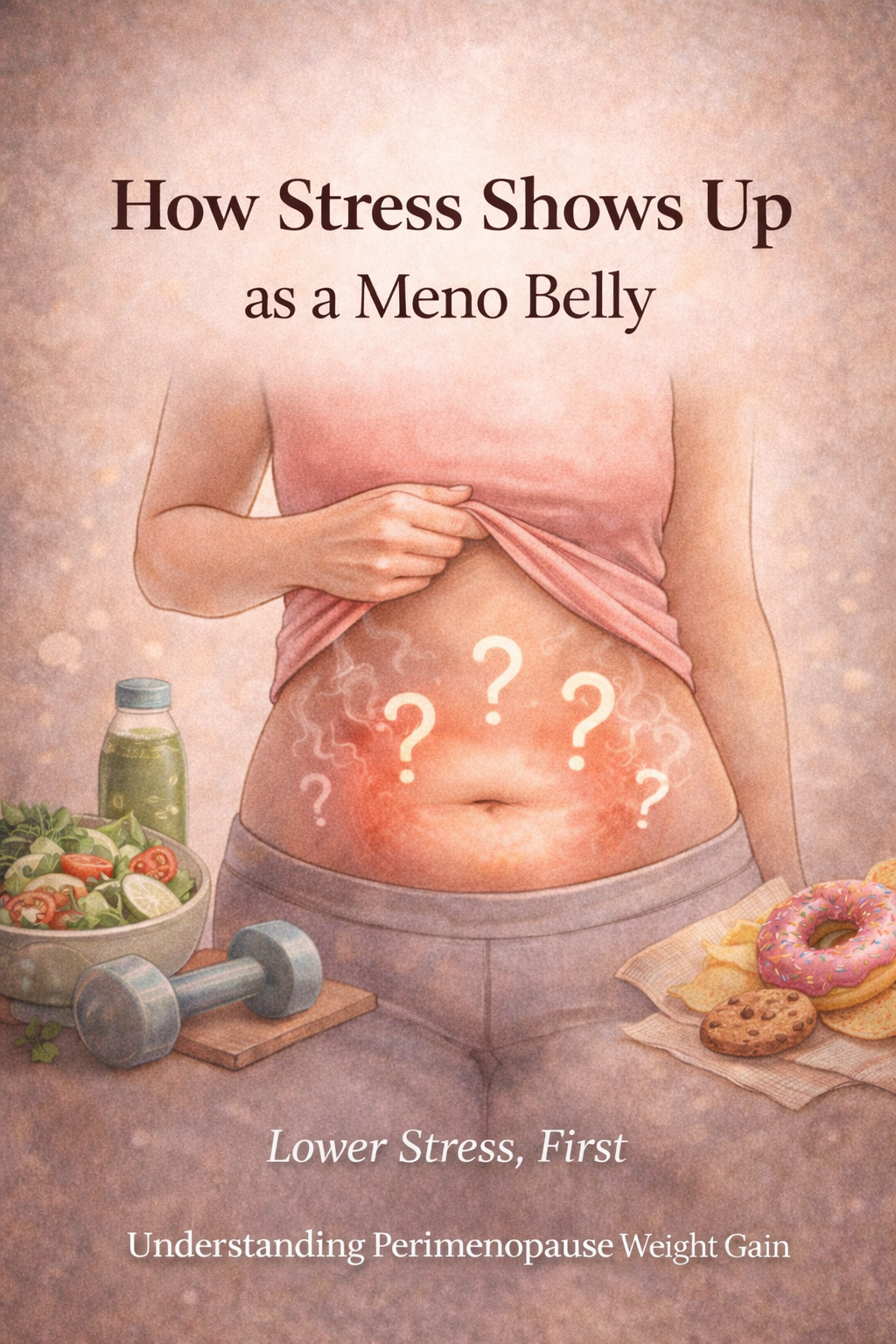
During perimenopause, your nervous system becomes more sensitive.
Hormonal shifts lower your stress tolerance. What you used to handle easily now:
disrupts sleep
increases anxiety
slows digestion
raises cortisol
And when cortisol stays elevated, the body stores fat — especially around the lower belly.
Not because you’re failing.
But because your system feels under pressure.
🔥 Your Digestion Is No Longer Predictable
Many women notice:
some days they digest well
other days they bloat instantly
foods they used to tolerate now feel heavy
they feel full quickly but hungry again soon
This inconsistency matters.
When digestion becomes irregular, the body doesn’t fully process food efficiently. Instead of clean energy, you get:
sluggish metabolism
fluid retention
heaviness
stubborn abdominal weight
It feels like your metabolism broke.
It didn’t.
It shifted.
🩶 Why Fat Settles in the Lower Belly
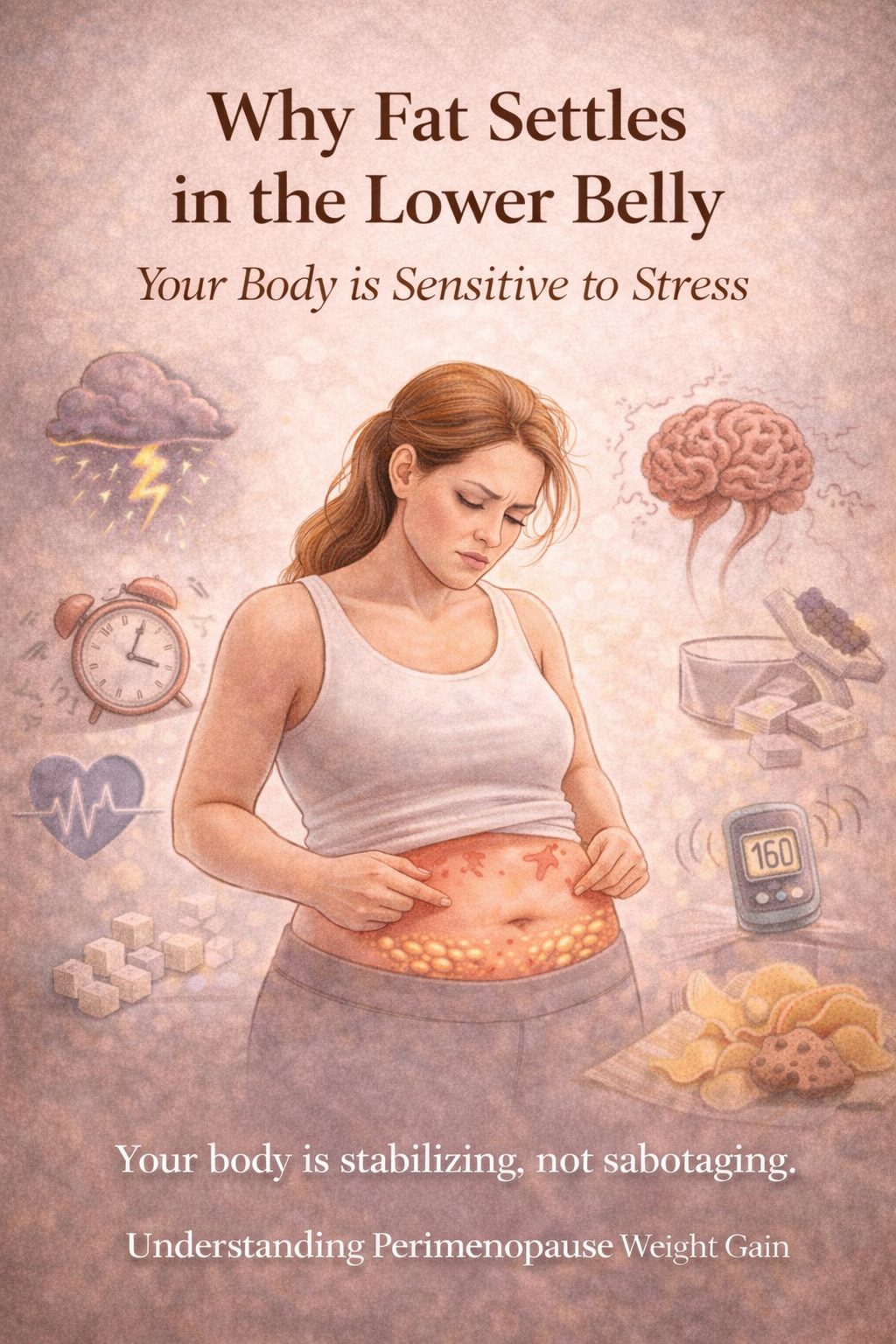
The lower abdomen is highly sensitive to:
stress hormones
blood sugar changes
nervous system activation
sleep disruption
When your body feels depleted or overstimulated, it goes into protection mode.
And protection mode often looks like:
storing around the middle
holding onto weight
resisting fat loss
Your body isn’t being difficult.
It’s trying to stabilize itself.
🌙 What Actually Helps in Perimenopause
Instead of restriction, focus on:
1️⃣ Stabilizing Digestion
warm, cooked meals
consistent meal timing
less cold food and drinks
simple, easy-to-digest combinations
2️⃣ Reducing Nervous System Overload
earlier bedtimes
gentle strength training
walking instead of excessive cardio
daily down-regulation practices
3️⃣ Supporting Blood Sugar
enough protein
healthy fats
not skipping meals
fewer extreme dietary swings
4️⃣ Creating Rhythm
Your body now responds best to predictability:
same wake time
regular meals
wind-down routine
steady movement
When stress lowers and digestion stabilizes, the body often begins to soften naturally.
Not through force.
Through regulation.
🏃♀️ The Right Type of Exercise for Meno Belly (It Depends on Your Body)
One of the biggest mistakes women make in perimenopause is assuming:
“If I just work out harder, this belly will go away.”
In reality, the wrong type of exercise can increase stress hormones, disrupt sleep, and worsen abdominal weight gain.
Your body now responds best to the right intensity — not the most intensity.
Here’s how to adjust movement based on your body’s tendencies.
🌬️ If You’re Naturally Lean, Anxious, or Prone to Overdoing It
You likely:
push yourself
thrive on intensity
love long workouts
feel guilty resting
struggle with sleep
Your body does not need more cardio.
It needs:
slower strength training
controlled resistance work
walking instead of HIIT
mobility + stability work (especially hips and pelvis)
breath-led movement
Why?
Because high-intensity training increases cortisol — and cortisol drives lower belly fat retention in perimenopause.
Your metabolism doesn’t need stress.
It needs steadiness.
🔥 If You Run Hot, Competitive, and Driven
You likely:
love structured workouts
enjoy pushing limits
feel frustrated when results slow down
feel inflamed or overheated easily
Your body needs:
moderate strength training (not max effort)
cycling instead of daily intensity
cooling, steady cardio (zone 2 walking)
recovery days that are real recovery
Too much intensity increases inflammation — which increases abdominal retention.
The goal now is metabolic stability, not domination.
🌾 If You Tend Toward Slower Metabolism or Heaviness
You likely:
gain weight more easily
feel sluggish when inactive
need momentum to feel good
Your body benefits from:
consistent daily movement
strength training 2–3x per week
brisk walking
short metabolic circuits (but not extreme)
building muscle mass steadily
But here’s the key:
Even for you, chronic stress workouts backfire in perimenopause.
The difference is rhythm — not punishment.
🌿 The Sweet Spot for Most Women in Perimenopause
2–3 strength sessions weekly (moderate load)
7–10k steps daily or steady walking
1 mobility / pelvic stability session
No daily high-intensity cardio
Real rest days
Without extremes.
🧠 The Mindset Shift That Changes Everything
There is another piece that is often overlooked when it comes to movement in perimenopause — and it has nothing to do with the type of exercise.
It has to do with how you relate to it.
For many women, exercise becomes a project of control:
trying to fix the belly
chasing weight loss
pushing harder when results slow down
obsessing over calories burned or results achieved
But this mindset quietly keeps the nervous system in a state of pressure and vigilance.
Your body can feel that.
And a body that feels pressured rarely relaxes enough to release weight.
🌿 Enjoyment Is Not Optional — It’s Physiological
What actually helps the nervous system relax during movement is enjoyment and safety in the process itself.
When exercise feels:
pleasant
rhythmic
sustainable
something you look forward to
the nervous system shifts into a calmer state.
In that state:
cortisol lowers
digestion improves
blood sugar stabilizes
the body becomes more willing to release stored weight
The movement itself becomes regulating rather than stressful.
🩶 Fit Movement Into Your Life — Not the Other Way Around
Another important shift is making movement fit comfortably into your daily rhythm rather than forcing your life around rigid workout goals.
That might mean:
walking after meals
strength training a few times a week
shorter, consistent sessions instead of extreme ones
choosing activities you genuinely enjoy
Consistency born from comfort and pleasure will always outperform intensity driven by pressure.
🌙 Why This Mindset Shift Matters More in Perimenopause
Earlier in life, your body could tolerate a more aggressive relationship with exercise.
In perimenopause, however, the nervous system becomes more sensitive to stress signals.
This means the body now responds better to:
steadiness
pleasure
rhythm
sustainability
When movement stops being a battle and becomes something your body enjoys, your system relaxes — and that relaxation often changes how your body holds weight.
🌿 If you believe in Manifestation…a Small Perspective Shift That Changes the Outcome

Constantly obsessing over an end result can actually work against you. When your focus is fixed on achieving the goal — losing the belly, fixing the body, reaching a number — your attention is unconsciously anchored in the feeling that you don’t have it yet.
That subtle sense of lack often creates more pressure, more stress, and more dissatisfaction with the present moment.
Ironically, this keeps the nervous system in the very state that makes change harder.
When you shift your focus toward enjoying the process — moving because it feels good, building strength, creating rhythm in your life — the pressure around the outcome begins to soften.
In a way, this relaxed state signals to your body and mind that things are already moving in the right direction.
Instead of chasing the result, you start living in alignment with it.
And very often, that’s when the body begins to change more naturally.
🌿 Not Sure Where to Start?
If this sounds familiar, there are 2 powerful first steps — depending on what you’re experiencing most.
1.💛 If you feel confused about your body…
If you’re thinking:
“Why does nothing work anymore?”
“Why did my digestion change?”
“Why am I suddenly sensitive to everything?”
Start by understanding your unique body type and pattern.
👉 Take the Free Dosha Quiz to discover your unique body type`and learn how to balance your body’s tendencies during perimenopause
2.🌙 If you feel wired, inflamed, or stuck in stress belly…
If your main symptoms are:
anxiety
sleep disruption
lower belly weight that won’t budge
feeling constantly “on”
Your nervous system may be driving the retention.
Before changing food or exercise again, calm the system that controls metabolism.
👉 Download the Free PeriPower Nervous System Reset — a hands on body-based guide to help your system settle so your body can finally release what it’s holding.
