🌿Your Full Perimenopause Dosha Result
Understanding Your Dosha
Your Dosha describes your natural body tendencies, not a problem to fix.
In Ayurveda, healing does not come from doing more of what your body already does —
it comes from offering the opposite.
Why?
Because balance is restored through contrast.
Perimenopause amplifies your dominant Dosha, which is why symptoms often feel louder now. Supporting yourself means counterbalancing, not suppressing
.
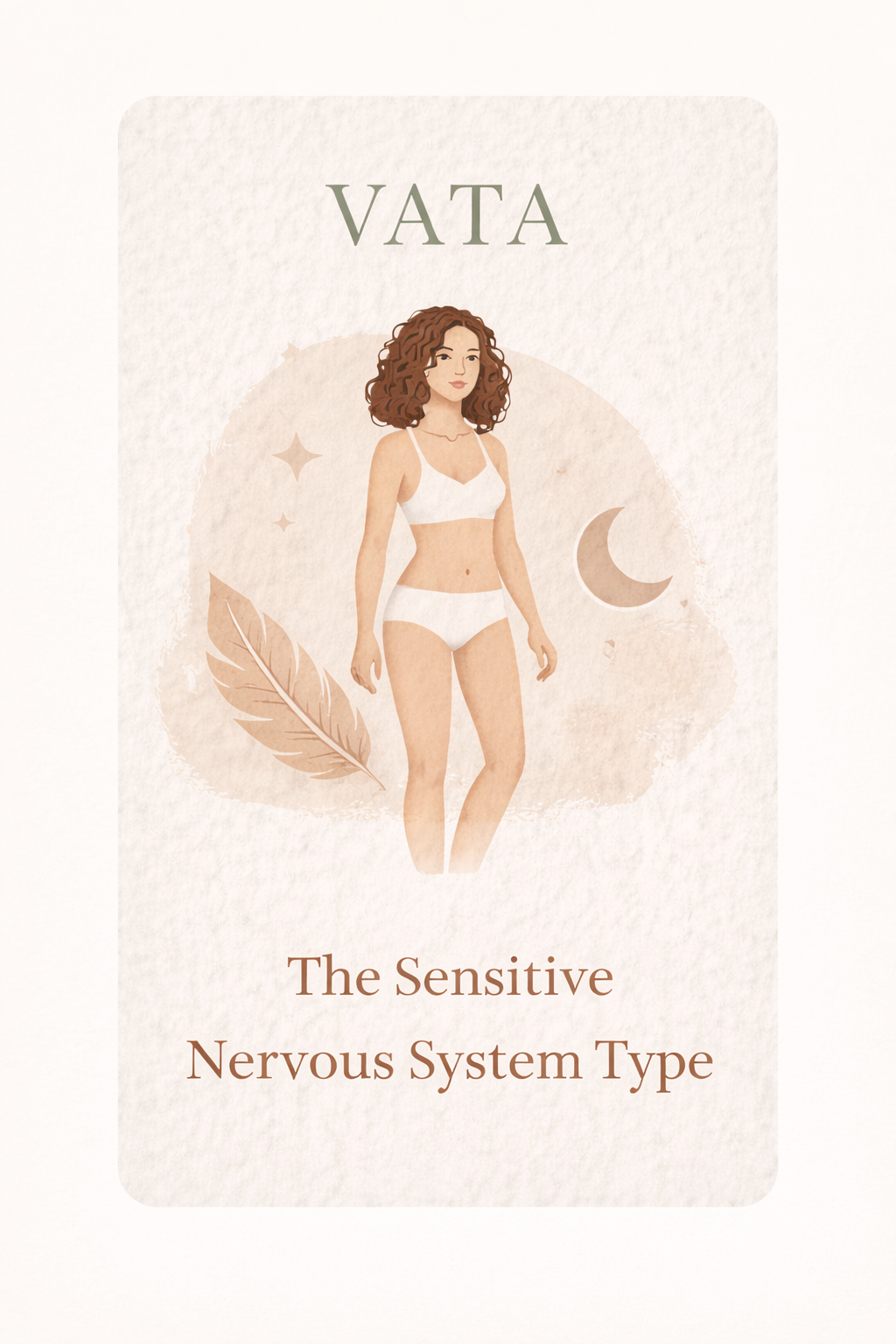
Mostly A 🌬️VATA (The Sensitive Nervous System Type)
Your natural constitution
You are intuitive, creative, perceptive, and quick-thinking. Vata-dominant bodies are naturally light, mobile, and sensitive — which means you often feel subtle changes in your body and environment before others do. You are adaptable and imaginative, but your system is easily affected by stress, irregularity, and overstimulation.
How this shows up in perimenopause
Perimenopause tends to amplify Vata qualities, making symptoms feel louder and more unpredictable. This may show up as anxiety, racing thoughts, disrupted sleep, joint dryness or instability, digestive irregularity, or a sense of feeling ungrounded or depleted.
This doesn’t mean something is wrong with you.
It means your nervous system and joints are asking for more support, not more stimulation.
Common Perimenopause Symptoms
Anxiety
Overwhelm
Insomnia
Joint cracking
Dry skin
Constipation
Irregular appetite
Feeling scattered
How balance is restored
In Ayurveda, balance is created by offering the opposite of your dominant tendencies.
Vata is light, dry, cold, and fast — so it is restored through:
Warmth • Oil • Slowness • Rhythm • Safety
Supporting your Vata means slowing down, nourishing your joints and tissues, keeping warm, and creating predictable daily rhythms that calm your nervous system.
More doing is not the answer.
Grounding is.
Vata-Friendly Foods
Focus on:
✅ Warm foods
✅ Soups and stews
✅ Root vegetables
✅ Oats
✅ Rice
✅ Sweet potatoes
✅ Ghee
✅ Warm herbal teas
✅ Cooked fruits
Reduce
❌ Skipping meals
❌ Cold smoothies
❌ Raw salads
❌ Excess coffee
❌ Excess fasting
Ayurvedic Supplement
Ashwagandha
Helps:
stress resilience
nervous system regulation
sleep support
Brahmi
Helps:
mental calm
focus
overthinking
Triphala
Helps:
gentle bowel regularity
detoxification
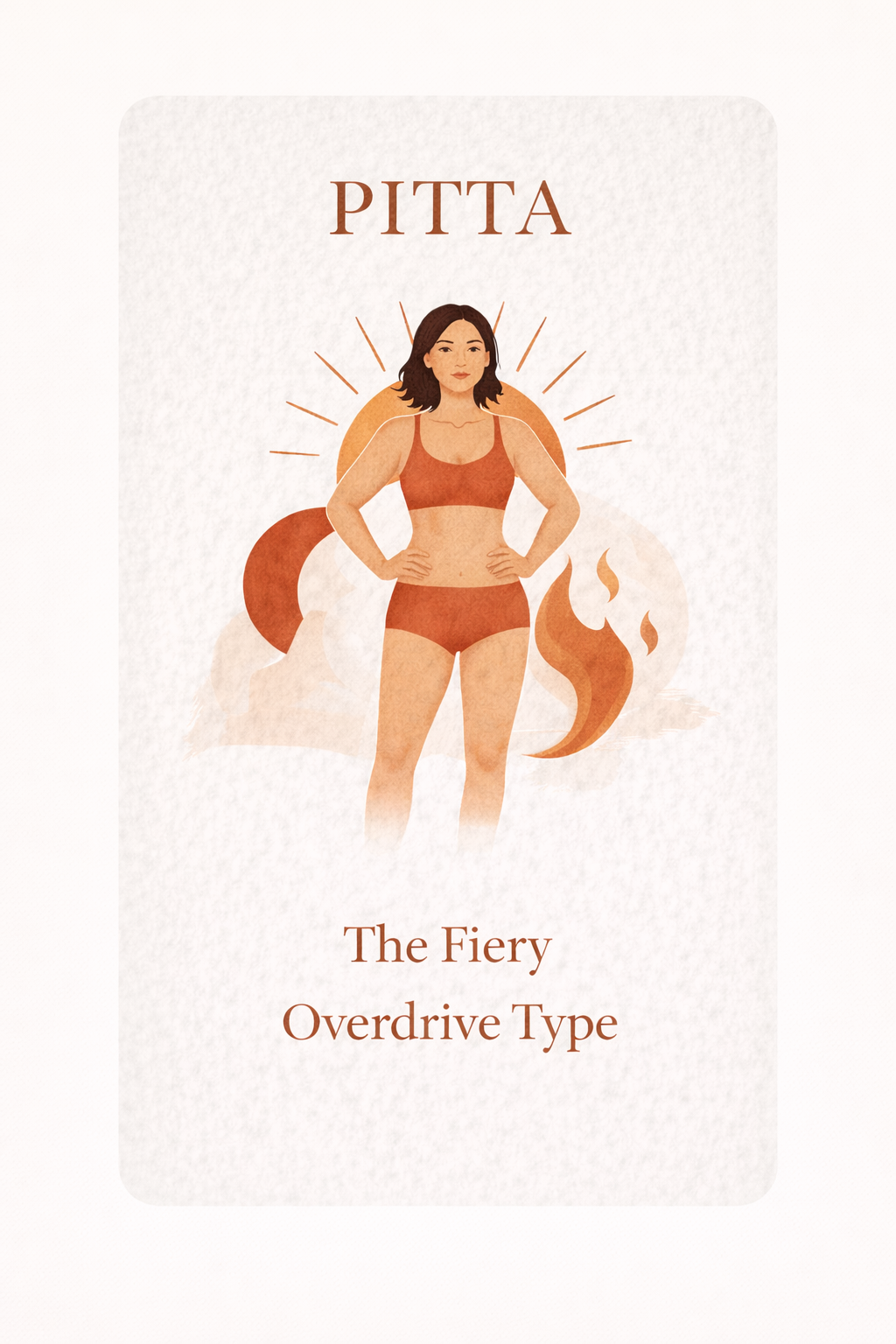
Mostly B 🔥 PITTA (The Fiery Overdrive Type)
Your natural constitution
You are focused, intelligent, driven, and capable. Pitta-dominant bodies are naturally warm, sharp, and strong, with a powerful capacity for leadership, clarity, and action. You tend to hold yourself to high standards and take pride in competence and productivity.
How this shows up in perimenopause
Perimenopause often intensifies Pitta, increasing internal heat and pressure. This may show up as irritability, rage, impatience, hot flashes, inflammation, headaches, or joints that feel hot, sore, or reactive — especially when you push yourself too hard.
Your body isn’t failing.
It’s signaling that the pace and pressure are no longer sustainable.
Common Perimenopause Symptoms
Hot flashes
Irritability
Anger
Night sweats
Inflammation
Acid reflux
Migraines
How balance is restored
Pitta is hot, sharp, intense, and driven — so it is restored through:
Cooling • Softness • Rest • Spaciousness • Emotional release
Supporting Pitta means cooling the system, reducing self-pressure, allowing rest without guilt, and creating space for emotions to move rather than be suppressed.
More pushing is not the answer.
Ease is.
Pitta-Friendly Foods
Focus on:
✅ Leafy greens
✅ Cucumber
✅ Coconut
✅ Pears
✅ Apples
✅ Berries
✅ Quinoa
✅ Fresh herbs
Reduce
❌ Alcohol
❌ Excess coffee
❌ Chili
❌ Highly processed foods
❌ Excess red meat
Ayurvedic Supplements
Shatavari
One of the best Ayurvedic herbs for peri/menopause.
Supports:
cooling
hormonal balance
female reproductive tissues
emotional stability
Brahmi
Supports:
calm mind
cooling effect
Aloe Vera Juice
Can support:
heat reduction
digestion
skin health
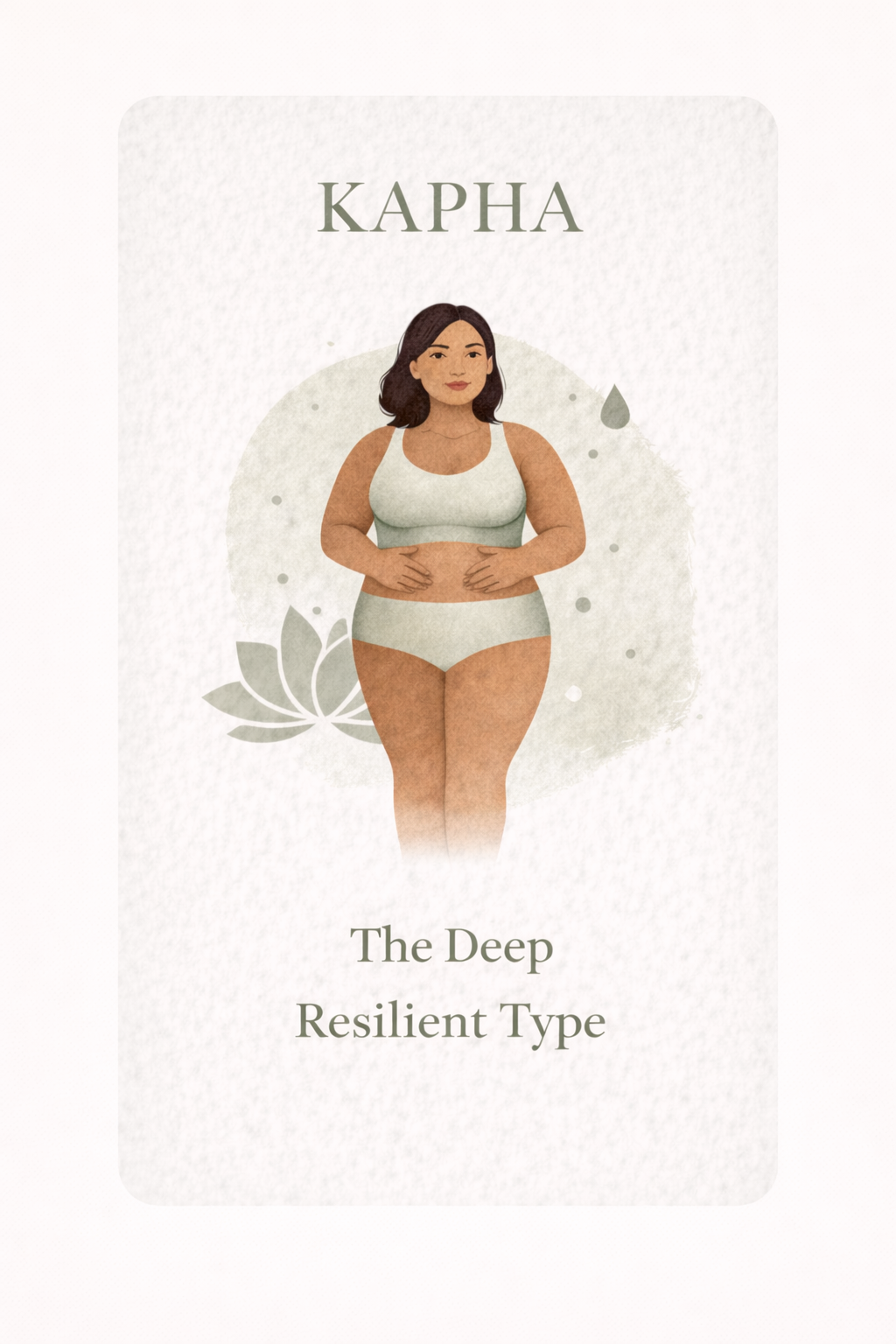
Mostly C🌱 KAPHA — The Deep Resilient Type
Your natural constitution
You are steady, nurturing, loyal, and deeply resilient. Kapha-dominant bodies are naturally strong, grounded, and stable, with excellent endurance and emotional depth. You thrive on routine and tend to be a calming presence for others.
How this shows up in perimenopause
Perimenopause can increase Kapha’s heaviness and slowness, leading to stagnation. This may show up as fatigue, low motivation, weight gain, brain fog, or stiff, heavy joints — especially after rest or in the morning.
Your body isn’t lazy or stuck.
It’s asking to be gently reawakened.
Common Perimenopause Symptoms
Weight gain
Fluid retention
Sluggishness
Low motivation
Brain fog
Excess sleep
How balance is restored
Kapha is heavy, slow, cool, and stable — so it is restored through:
Movement • Lightness • Circulation • Warmth • Novelty
Supporting Kapha means consistent movement, reducing heaviness, stimulating circulation, and inviting gentle challenge and change into daily life.
More rest is not the answer.
Flow is.
Kapha-Friendly Foods
Focus on:
✅ Light meals
✅ Vegetables
✅ Lentils
✅ Beans
✅ Warming spices
✅ Ginger
✅ Turmeric
✅ Bitter greens
Reduce
❌ Sugar
❌ Excess dairy
❌ Large portions
❌ Emotional eating
❌ Heavy evening meals
Ayurvedic Supplements
Trikatu
Traditional blend that supports:
metabolism
digestion
reducing sluggishness
Turmeric
Supports:
inflammation
joints
circulation
Guduchi
Supports:
immunity
metabolism
vitality
🌕 One important truth
Your Dosha is not a label, but crucial information about yourself that will help you navigate this phase and beyond with ease and understanding
👉 Want personalized support?
to see how I can support you through this transition.